Management Jobs in Construction | Roles, Scope & Industry Context
22/01/2026
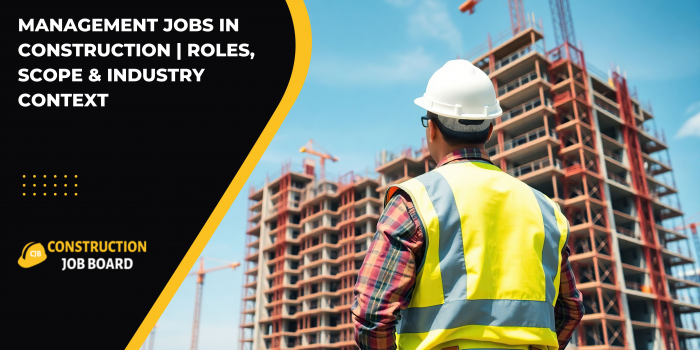
Management Jobs in Construction: Roles, Scope, and Industry Context
Overview
Management jobs in construction focus on the organisation, coordination, and oversight of construction activities across project lifecycles. These roles exist to support structured delivery by aligning people, processes, schedules, and documentation within regulated construction environments.
Unlike skilled trades or technical execution roles, construction management positions operate at a process and coordination level. Their function is to enable projects to progress predictably by maintaining operational continuity, regulatory alignment, and information flow between stakeholders.
This article provides a neutral, informational explanation of construction management jobs, their role categories, functional scope, and position within the wider construction industry.
What Are Management Jobs in Construction?
Construction management jobs involve overseeing how construction work is planned, coordinated, and monitored. These roles do not typically involve physical construction tasks. Instead, they focus on ensuring that activities occur in the correct sequence, within defined constraints, and according to agreed requirements.
Management roles may operate at:
- Individual project level
- Single site level
- Multi-project or programme level
Their responsibilities vary depending on project size, organisational structure, and regulatory context.
Role Position Within the Construction Lifecycle
Pre-Construction Phase
During early stages, management roles may support:
- Programme planning and sequencing
- Coordination of design and technical inputs
- Preparation of documentation frameworks
This phase focuses on establishing clarity before site activity begins.
Construction Phase
During active construction, management roles typically oversee:
- Daily coordination of site activities
- Workforce and subcontractor alignment
- Progress monitoring and reporting
- Health, safety, and compliance tracking
These activities support continuity rather than direct task execution.
Post-Construction Phase
After construction completion, management roles may assist with:
- Project close-out processes
- Documentation handover
- Final coordination and reporting
Common Categories of Construction Management Jobs
Construction management is a broad category that includes several distinct roles.
Construction Manager
Oversees overall project coordination, ensuring alignment between planning, execution, and reporting activities.
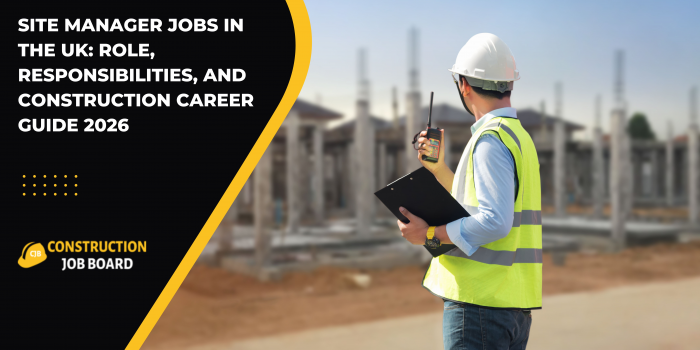
Site Manager
Focuses on day-to-day site operations, sequencing work activities and coordinating on-site teams.
Project Manager
Responsible for monitoring time, cost, and scope parameters across the project lifecycle.
Contracts Manager
Manages contractual documentation, variations, and coordination with subcontractors and suppliers.
Commercial Manager
Oversees cost tracking, valuations, and financial reporting related to construction projects.
Operations or Programme Manager
Coordinates multiple projects or sites, focusing on consistency, performance monitoring, and resource allocation.
Typical Work Environments
Management jobs in construction are found across:
- Main contracting organisations
- Subcontracting and specialist firms
- Property development companies
- Infrastructure and civil engineering projects
- Public sector construction bodies
Roles may be site-based, office-based, or hybrid depending on operational requirements.
Core Functional Responsibilities
While job titles differ, most construction management roles share common functional responsibilities.
Planning and Scheduling
Aligning tasks, resources, and timelines to support structured project delivery.
Coordination and Communication
Facilitating information flow between technical teams, site staff, and stakeholders.
Compliance Monitoring
Tracking adherence to safety standards, regulatory requirements, and contractual obligations.
Reporting and Documentation
Maintaining records related to progress, changes, and coordination activities.
Relationship to Other Construction Roles
Construction management roles function alongside other industry roles:
- Trades perform physical construction work
- Engineers define technical systems
- Designers provide spatial and technical intent
- Managers coordinate processes and sequencing
These roles are interdependent and operate within defined boundaries.
Project Scale and Management Structure
On smaller projects, management responsibilities may be consolidated into fewer roles. On larger or more complex projects, responsibilities are typically distributed across specialised management positions to maintain clarity and control.
Industry Context and Neutral Positioning
Construction management roles exist across both private and public sector environments. Their structure and scope are influenced by:
- Regulatory frameworks
- Contractual arrangements
- Organisational processes
This article does not assess effectiveness, suitability, or career pathways.
FAQs
What are management jobs in construction?
Management jobs in construction focus on planning, coordination, oversight, and monitoring of construction activities rather than physical execution work.
Are construction management jobs site-based?
Some management roles are site-based, while others operate from offices or in hybrid settings depending on project structure and size.
Do construction managers perform trade work?
No. Construction management roles coordinate processes and teams but do not usually perform hands-on construction tasks.
Are management jobs present on all construction projects?
Most projects involve some level of management function, though the number and structure of roles vary by project complexity.
Do management roles differ between small and large projects?
Yes. Smaller projects may combine multiple responsibilities into one role, while larger projects use specialised management positions.